Showing posts with label Perspectives. Show all posts

May 19, 2015

Intelligently Childish

Premier nerd, (and a personal hero of mine) Simon Pegg recently gave an interview where he talked about the effects of geek and nerd culture. "Before Star Wars, the films that were box-office hits were The Godfather, Taxi Driver, Bonnie and Clyde, and The French Connection – gritty, amoral art movies... Then suddenly the onus switched over to spectacle and everything changed … I don’t know if that is a good thing."

He went on to add, "Obviously I’m very much a self-confessed fan of science fiction and genre cinema but part of me looks at society as it is now and just thinks we’ve been infantilised by our own taste. Now we’re essentially all consuming very childish things – comic books, superheroes. It is a kind of dumbing down, in a way, because it’s taking our focus away from real-world issues. Films used to be about challenging, emotional journeys or moral questions that might make you walk away and re-evaluate how you felt about … whatever. Now we’re walking out of the cinema really not thinking about anything, other than the fact that the Hulk just had a fight with a robot."

The backlash against his words was almost immediate, because you know... the Internet, and the uglier side of nerd culture in general. However, this time I must admit that I felt like grabbing a digital pitchfork and joining in on the cacophony of Twitter rage, but then I had to stop and step back. Why did I feel so personally hurt by his words? And surprisingly the pain was personal. I think a lot of it has to do with the fact that geek culture has very few true-blue celebrities, and we tend to put them up on a pedestal, Seth Green, Nathon Fillion, Simon Pegg, etc. So hearing those words from one of our more vaunted namesakes hurts. It's like hearing a harsh truth from your father who is telling you to do as he says but not as he does.

However, the real fact is that it is a harsh truth. First off, Simon Pegg, as much as we want to put him on a pedestal of lightsabers and starships, is only human. He is fully in his right to have his doubts, his personal struggles, and even a crisis of consciousness or two about the work he has dedicated his life too. We all have moments of doubts, and he is entitled to his own. Secondly, he may not be wrong, which may also explain the backlash. People don't like accepting hard criticism, even when it is done with the best of intentions.

With the widespread appeal of nerd culture through comic conventions, blockbuster movies, and TV shows, there has been a neglect of adult-problems and real-world issues. You don't need to look any further than Star Trek: Into Darkness to see how far the once lauded and highly intelligent Star Trek franchise has fallen from its intellectual roots. We spend our time talking about the accuracy of Batman's voice or we nitpick how close Game of Thrones stays to the books, but we rarely talk about the issues that face our world today, political elections, Middle-East turmoil, global warming. It's easier to watch Captain America punch a Nazi than try to understand the soci-economic-politcal justifications and ramifications of facism. This dumbing down of, not just our society, but nerd culture in general (again I refer you to Star Trek: Into Darkness) is a natural outcropping of our culture's growing popularity, and that is also important to remember.

Bonnie and Clyde made more than $50 million, and at the
time was considered one of the most controversial films in
Hollywood due to its depiction of sex and violence, but
it has largely been credited as being a film that changed the
way Hollywood did movies. (Sex and violence sells tickets.)
Now, I do want to get one thing straight before I receive any angry Tweets of my own, (they're mostly from my mother,) Simon Pegg isn't entirely wrong but he isn't entirely right either. There are still plenty of adult movies making money, American Sniper and The Imitation Game, both did well, and movies like Interstellar and Dawn of the Planet of the Apes, made more than subtle attempts to talk to something more intelligent than just explosions. And as for the movies he mentions, The Godfather was top at the box office in 1972, followed closely by the (two amoral and gritty real-life movies:) the Poseidon Adventure and What's Up Doc. The French Connection was beat out by Fiddler on the Roof, and just edged out, James Bond in Diamonds Are Forever. Lastly, Taxi Driver never broke the top fifteen in highest grossing films in 1976. Number one that year was Rocky, and number two was To Fly!, which was one of the first movies ever shot in IMAX. (I wonder if the ticket was double the price.) The spectacle and infantile-ness has always been there. These days it may be superheroes as opposed to cowboys, or space operas compared to sports movies, but the general idea remains the same. I will admit that technology has allowed the "genre" film to snowball like never before, but the bottom line for Hollywood remains the same, money.

More to the point, it is tempting to blame nerd culture for making the world more childish, but the world was always kind of childish. If its not comics, its celebrity culture, reality TV, sports, and even religion. In the fifties it was radio programs and shopping sprees. In Roman times it was gladiators and chariot racing. The movies Simon Pegg holds up as "artsy:" The French Connection, The Godfather, Taxi Driver, Bonnie and Clyde... do you notice a connection between them? They had a lot of violence in them, and if you don't think that was part of the appeal that put butts in the seats, than you have never met another human being before. His argument also discounts movies like Gone with the Wind, Ben-Hur, and King Kong. Those movies were just as much about spectacle as Star Wars, but the argument also seems to imply that none of these movies have anything to teach us. As if they have no inherent or real-world value of their own, and that is just wrong.

Star Wars was mythology (then commercialism, but that came late.) There is a lesson in there about growing up, confronting challenges, finding spirituality. Its not all laser swords and impossible outerspace dog fights. The original Star Trek inspired people to dream and believe in the possibilities of science. Superman (when not directed by Zac Synder) gives us hope and an example to try and live our lives by. I would argue that these lessons are just as important as any lesson found in Taxi Driver or in the study of the Israel-Palestine conflict. A lot of these stories and these passions, at least for me, become the basis of how I see the world.

The real trick then becomes to use that basis as way to inform the world. Yes, nerd rage is real, but I would argue that if you go to Comic Con or the opening of any new geek-culture movie you will find a society of people who are intelligent, peaceful, and willing to help. We need to turn those impulses and the message of who we are into something greater. In fact, I would go so far as to argue that geekdom could save cinema and popular culture from its own infantile self. We have the tools, the stories, and the understanding to make our summer blockbusters and our smash TV hits more intelligent and more engaging with real-world issues.

Pictured: A female scientist respected for her mind.
Historically, fantasy and especially science fiction have always challenged our beliefs, given us a lens to understand society, and given us license to dream about a better future. The irony of this, (and personally I think some of where these feelings are stemming from for Simon Pegg,) is that Star Trek was always the one thing we could hold up as the pinnacle of this idea. The original series tackled everything from the Vietnam War to the counter-culture movement, and the more recent shows have continued that trend with varying degrees of success, (I have been slowly re-watching Star Trek: Deep Space Nine, and even though I have seen them all before I always find myself amazed by some of the poignant stories they tell and the new lights they cast on problems we are still having today,) but that changed in 2009. The rebooted Star Trek movie became more about popcorn, lens flare, and explosions, a trend that the second movie continued, only with less success. Star Trek: Into Darkness had the perfect opportunity to talk about the ideas of security versus liberty and blew it, (but I will stop there, because I have ranted on that subject before.) Simon Pegg has been tapped to rewrite the newest Star Trek installment, and had this to say:

"They had a script for Star Trek that wasn’t really working for them. I think the studio was worried that it might have been a little bit too Star Trek-y... Avengers, which is a pretty nerdy, comic-book, supposedly niche thing, made $1.5 billion dollars. Star Trek: Into Darkness made half a billion, which is still brilliant, but it means that, according to the studio, there’s still $1 billion worth of box office that don’t go and see Star Trek. And they want to know why."

The Millennials are growing up, and we are taking our childish culture with us. There is no stopping that, but now we need to use that culture and the lessons it has taught us to change the world and tackle the problems that are out there. Superhero movies don't need to be mutually exclusive with real-world parallels, in fact the best ones aren't. Captain America: Winter Soldier worked so well because it became a parable about America's growing police state, and Captain America: Civil War will probably hit similar notes about privacy versus public safety. These blockbuster movies can be more than spectacle. They can be smarter, and also successful. They can inform national discussion and spark new ideas in the next generation, but it is up to us to make sure that nerd culture and our society in general are not dumbed down in the name of opening week profits.

I think a lot of Simon Pegg's frustration is coming from his process with Star Trek. "Sometimes [I] feel like I miss grown-up things, and I honestly thought the other day that I’m gonna retire from geekdom." 

Personally, I don't want to see him go, if only because he is saying things that I think we need to hear. We have to make sure nerd culture finds a balance between smart and entertaining. It's okay to be childish, as long as you do it intelligently, and maybe that means we need to take a look at our own nerdiness and accept that we might have to make some changes for the better. Either way, it is a worthwhile topic to talk about. So I ask everyone on the Twitter-verse to lay off. These statements should be the start of a discussion, not the end of an angry rant. The last thing we need is to drive another of our ranks from the conversation.


April 7, 2015

It's All Geek to Me

"Meh."

Three letters that express so much indifference, laziness, mild disappointment, and a general malaise to one's own existence, but there is also much more to that small interjection. It proves a point that language is not static. It morphs (like a verbal giant mechazoid,) with each new generation, each new year, and even with each new Netflix original.

In case you are unaware, Meh is a term that was coined by The Simpsons all the way back in 1994, when a librarian used it to react to the fact that voting records weren't classified in Springfield. Since then it has entered our vernacular as a dictionary-definable word. That was not The Simpsons' only contribution to English language, Cromulent and Craptacular both entered our collective vocabulary after being featured on the cultural juggernaut of a show, as well.

Language is an integral part of the human experience. Even those without the ability to speak or hear still engage in the use of language through other means. As such, the way we speak inherently affects the way we see and talk about the world around us, but that is not a one way street. The way we see the world and our interactions with it also affects the way we speak and talk about things. Additionally, our cultural experiences and understandings also influence our word choices, speech patterns, and other linguistic idiosyncrasies. This is nothing new either, our language (regardless of what language you speak) has been changing and evolving ever since our great x 10,000 grandfather grunted about someone not picking up after themselves.

I mean who leaves their dirty loincloth just lying around on the cave floor. "What were you raised in a barn?" (Which of course would mean that not only had you managed to move beyond the hunter-gather phase of civilization, but you had developed complex ideas of animal husbandry, crop rotation, feed storage, and construction techniques utilizing lumber.)

Realistically, cavemen would not have used the phrase What were you raised in a barn? I am sure they had other culturally relevant phrases to use when insulting their off-spring about their untidiness. I have no idea what those phrases were, but I am almost certain they had them, because humans shape our language with allusion and metaphor. We use our understanding of the world to influence the way we talk to one another, and I am not just talking about cliched lines that your grandfather might toss out.

For example: Toxic. The word traces its origins back to the Greek root-word toxon, which literally means a bow, the instrument you would use to shoot arrows from. That seems like an odd word to evolve into something that basically means poison, but not when you consider the story of Hercules and the Lernaean Hydra. The hydra's blood was poisonous, and after Hercules managed to kill the beast he dipped his arrows in its blood. He then used the poisoned arrows throughout the rest of his adventures. So in ancient Greek, saying something was toxic literally meant you were saying something was "from the bow of Hercules."

To them it was an allusion, a cultural idiom based around a story. The word then evolved into Latin and eventually into English to mean poisonous, with the original cultural reference lost to the ages, (unless you Google it.) More to the point, this is not the collective lexicon being influenced by just a person's direct experience with the world, but by a myth. Similarly calling someone Superman or Sherlock are two words not based on experience but on stories, mythologies in their own right, yet they are used commonly in everyday speech. Sticking with the comic book theme, Kryptonite, is literally a fictional rock that weakens Superman, but we use it in passing to mean someone's weakness, their Achilles' Heel.

The ancient Greek hero Achilles was invulnerable in every spot, except for his heel, the spot where his mother held him when she dipped him into the River Styx. Most people don't think of that story or need to explain it when they use the term Achilles Heel. People just understand what it means, because language is more than just sounds we make with our mouth holes. It's a social contract we all enter into, and it's not just about common words that represent ideas. Language is about nuance and even a little poetry. Yes, you can say, "I am not great at Math," or you can say "Math is my Kryptonite." It is more expressive, and it automatically gives the listener an intense and personal understanding of what you meant.

This means that culture (and especially nerd culture,) our stories, movies, comics, literature, etc, are all ways we absorb the world. They paint the picture that we hold up to compare to the people and places that surround us. We construct our world based upon all our influences, just like the Ancient Greeks. We do not have gods, we have superheroes. We do not have traditions, we have pop culture, but it all amounts to the same. It is a lens through which our lives and our language becomes filtered. Our shared stories give us a sort of cultural shorthand. We call someone a Newb or Noob if they suck, we say something has been Nerfed, if it was made softer or easier. Words like Frak and Khalessi enter into our vocabulary because, in some ways, they are more descriptive than saying F*ck or Barbarian Queen. Some will stick and some will fall off, proving to be nothing more than a fad, but they do enter into our thinking and our world views. We experience the world not only through the things we see and touch but through the stories that we tell, because language is so much more than pointing and grunting. It is so much more than mundane observations or utilitarian sound.

As Stephen Fry once said, "Language is my whore, my mistress, my wife, my pen-friend, my check-out girl. Language is a complimentary moist lemon-scented cleansing square or handy freshen-up wipette. Language is the breath of God, the dew on a fresh apple, it's the soft rain of dust that falls into a shaft of morning sun when you pull from an old bookshelf a forgotten volume of erotic diaries; language is the faint scent of urine on a pair of boxer shorts, it's a half-remembered childhood birthday party, a creak on the stair, a spluttering match held to a frosted pane, the warm wet, trusting touch of a leaking nappy, the hulk of a charred Panzer, the underside of a granite boulder, the first downy growth on the upper lip of a Mediterranean girl, cobwebs long since overrun by an old Wellington boot."

Language is also as Lisa Simpson once said, "Meh."

March 24, 2015

Not All Those Who Sonder Are Lost

Sonder n. The realization that each random passerby is living a life as vivid and complex as your own—populated with their own ambitions, friends, routines, worries and inherited craziness—an epic story that continues invisibly around you like an anthill sprawling deep underground, with elaborate passageways to thousands of other lives that you’ll never know existed, in which you might appear only once, as an extra sipping coffee in the background, as a blur of traffic passing on the highway, as a lighted window at dusk.

The above definition comes from the site: The Dictionary of Obscure Sorrows, and I think it might be my newest favorite site. Sonder is a realization, an epiphany that comes when you see that the guy who sells you coffee every morning has a picture of his family, or when that homeless man on the corner tells you that he graduated from Yale and served as an Army Ranger.  Now, with the impending possible discovery of parallel universes, thanks to the LHC, we may all have to acknowledge that we are not as truly remarkable and unique as we might sometimes like to believe. We tend to break the people in our lives (especially those on our peripheral) down to base stereotypes, unchanging and small boxes that allow us to view them in one light and then forget that they existed the moment they are gone. Sonder comes when those people surprise us and break out of the roles we assigned for them. Before that, they were just background characters, extras in the movie that is your life, your story.

It is interesting how stories, movies, plays, etc give us the language to talk  about this phenomenon. We are the main characters in our lives. Our story is about us, we see antagonists and challenges and plot twists wherever we look. We all see a cast of supporting characters, (our friends and family.) We understand that they are complex, but maybe not as complex of characters as we are. Then there are the extras, little more than set dressing to the happenings of our lives, but to them, we're the dressing. We become that guy standing on the subway, wearing the black jacket, or that girl walking down the street in uncomfortable shoes. More to the point that is all we will ever be in their stories, one-dimensional creatures. A few pixels in the background of a picture they took once. A voiceless body on the streets at night. All our problems, our thoughts, our wishes, our hopes, and fears, and loves, are nothing to them. Even celebrities are just faces on a screen. Yes, we may know their names and facts about their lives, but they still aren't the heroes of our stories.

This leads to a wrong-headed understanding that we are somehow important. It's what I am going to call ZSS, or Zombie Survivor Syndrome. Whenever people talk about the zombie apocalypse we always talk about what we would do to survive. We discuss how we would weather the crisis as part of a group of desperate survivors, but think about that. We never imagine it will be us who dies, who has the accident, who gets the heart attack. How could it be us? We are the hero? But statistically, you are more likely to wind up as Shambling Corpse #43 than as Rick or Carol, or any other survivor. Sonder is a state of understanding that we are not significant, at least not more so than anyone else around us. There is a saying that goes, "Everyone driving faster than me is a maniac, and everyone driving slower than me is a moron." Realizing that that is not true is sonder.

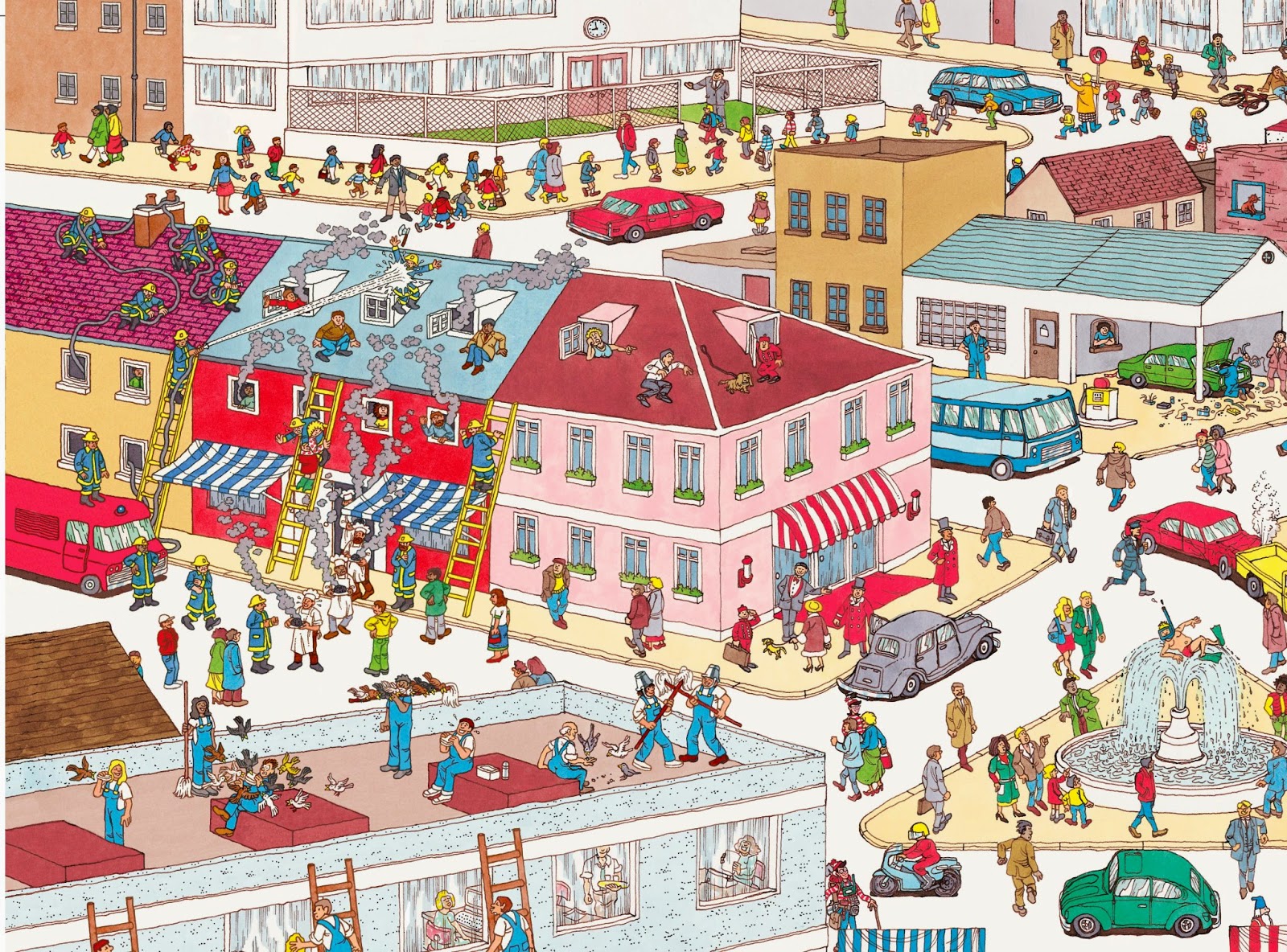
I have to admit, that I am broken, even just a little. Sonder is nothing new to me, though I never had a word to put to the sensation before. I have always been a bit too empathetic, at times it can prove a burden. Ever since I was a kid sitting in the back seat watching the passing cars I have wondered about the people in them. Where were they going? What did they do? Were they happy? Sad? Today I do it on a larger scale with co-workers and friends and the guy walking his dog on the street. Maybe that is just part of being a writer, a storyteller. I try to find the story in everyone I meet, but sometimes I also try not to. When you see everyone in the world as a potential diamond, than you realize that you are no different, no more special, than anyone else. The world doesn't owe me anything, at least not more or less than it owes that old woman at the supermarket. You see, there is a benefit to thinking you're special, it gives you drive and entitlement that helps you succeed. It helps to not think of all those zombie you are carelessly cutting through as special people: mothers, brothers, sisters, graphic designers, main characters in their own foregone life. We strive to be the Waldo, but sometimes we can't be. And sometimes we have to acknowledge that it's okay not to be.

Where's Waldo is a perfect microcosm of sonder. The whole name implies that we need to find this one person, this special person. Look at the image to the left. Can you see Waldo? He is hidden amongst a multitude of people and crowds, but we ignore all those people. All we want to do is find this one man in a weirdly striped shirt. Hell, it's the name of the game. It's become a cultural expression. We look for the needle in the haystack while ignoring the hay, but have you ever stopped to look at the other people occupying Waldo's world? They are alive, they have their own problems and triumphs. There are fireman putting out a fire that was obviously started by three incompetent chefs. There is a car accident, a man in scuba gear in the fountain, kids crossing the street, a janitor being attacked by birds, and two more LARPing for their own amusement on a rooftop. All those people have lives, and maybe even animated spouses and children and pet parakeets waiting for them at home.

There is also a man at the bottom. He is on the right most ladder. He is trying to flirt with one of the secretary's working in the building, and it looks like she is responding. Maybe this is the culmination of his life, the thing he has been secretly hoping for, the love he has been waiting for? Or maybe he is an egotistically chauvinist asshole, but he is living the story as his own main character, completely oblivious to the idiot in the red and white hat and hiking gear. In fact, of all the people on this page, I would argue Waldo is one of the more boring ones. Sure he is seeing the world, but is he living in it? Whenever we see him he's alone, never engaged with another person or doing something wacky or something fun. He just stands there. So, yes, he is the main character of this book, but is that always the best thing? For my money I would rather be part of the couple who is standing in front of the building on fire. They are shoulder to shoulder watching the calamity unfurl as a chef tries to explain himself to a fireman, but they are together and there is something sweet about it, something that Waldo will never get to experience.

A state of sonder does not mean to imply that we are not unique, just not as unique as we sometimes think. You are not a diamond among the rough, just a diamond among many others. Still, a diamond is a diamond, and if more people thought like like this, if more people experienced sonder, than maybe the world would be a better place. After all, there is a benefit to not being Waldo, to being the guy standing above it all, looking down on the world and its all beauty and fountain scuba diving. When you stop thinking of yourself as something different you get to see how truly alike we all are. There will never be another you, but there will also never be another person like your mailman or that taxi driver that ran those two red lights or your baby niece in her crib. When you understand sonder, you understand how precious the world is, and how truly lucky we are to spend a few years passing through it.


February 24, 2015

Tweeting Aliens

Why do you people always call during Bleet-blorp?
So I was away last week, and during my time off I found myself revisiting Space Chronicles by Neil deGrasse Tyson. This was my second read through and I tore through it in about a day and a half. Partly I used the book as a resource for a writing project I have been working on, but it also could have been the trip to the Kennedy Space Center in Florida that helped to re-inspired my return to the words and passions of Dr. Tyson. Either way, I have find myself in a certain mood of cosmic musing.

So imagine my interest when I returned to the real world and started reading about how SETI (Search for Extraterrestrial Intelligence) scientists debated the merits of sending active messages into space in order to look for intelligent life during the annual meeting of the American Association for the Advancement of Science. This is called Active SETI or METI (Messaging to Extraterrestrial Intelligence,) a name I find ironic, because I am on Twitter and I sometimes wonder if most of us are even messaging any intelligent life here on Earth.

There have been a few attempts at intergalactic emails in the past. My favorite attempt came in 2008, when NASA beamed the Beatles song, Across the Universe to Polaris. Though in all fairness this wasn't considered an actual attempt to make contact with an alien race, more of a publicity stunt cooked up NASA and a Beatles historian. By all accounts Polaris (our North Star) most likely does not harbor any worlds that would be capable of supporting life. However, there have been other more serious attempts at sending isolated messages to nearby star systems, such as A Message from Earth.

This message was a high powered digital radio transmission aimed at Gliese 581, specifically Gliese 581c, which is a possibly habitable planet with a warm and temperature climate that is a good candidate for housing life. The message was sent in 2008 and contained 501 messages that were selected through a contest on the social media site, Bebo. These messages will reach the planet in 2029, and then I guess we wait and see if we get a response or just some version of an answering machine message. (Maybe they are screening us.) Similarly, in 2013, the somewhat controversial Lone Signal project began, founded by two businessmen.

The Lone Signal charges the public money so that they can send messages, 144-characters in length, to the red dwarf star Gliese 526 which has its own confirmed planetary system. Unlike A Message from Earth, this is not a one time time transmission. In fact, the Lone Signal project wants to earn enough money to build a network of radio dishes to actively send messages to a variety of candidate solar systems within our galactic neighborhood... and who better to be our first ambassadors to these distant neighbors than any jerk on the Internet that is willing to pay twenty-five cents to send a penis joke to the real-life equivalent of the Klingon Empire.

This brings us back to the debate among the SETI scientists, which was held at the AAAS 2015 Conference this past week. If we are going to start sending active messages of greeting out into the universe, we will need to be prepared for the consequence of getting an answer back in return. For most of its life, the SETI Institute has only listened to the heavens, like some creepy dude in the 90's that cruised around with a baby monitor to listen to people talk on their cordless telephones.

SETI themselves lays out some of the dangers on their website. Until now, SETI researchers have not been very interested in broadcasting... To begin with, we are a technologically young civilization... there are surely societies that have possessed the ability to send high-powered signals for tens of thousands, if not millions, of years... We are the new kids on the technology block, it may behoove us to listen first. Some have also expressed concern that broadcasting might be dangerous, literally calling attention to our existence. Even Stephen Hawking believes that any alien visitors would basically treat us the way Europeans treated Native Americans, (which if you need a history refresher didn't turn out so great for Native Americans.)

Hit me up on Twitter @IWantToBurstOutOfYourChest
Yet, is that just a pessimistic view or is there truth to it? After all, there are plenty of reasons why making a friend request across the galaxy could be beneficial, (and not just for having someone to share our food pics with, either.) No matter who you are, you have to admit that Earth is far from perfect. We have a lot of problems, and some friendly visitors from beyond our solar system could bring some solutions, such as cleaner energy, faster computer processors, maybe even a way to reverse the effects of global warming, to say nothing of the possibilities of interstellar travel. Heck, even if we just got back a message saying, "Hey, how are you? We like your profile, and we'd be very interested in meeting up sometime for a drink," (Which, is basically every message I send girls through my dating profile,) our society would still be irrevocably altered.

If humans were forced to live with concrete proof of the existence of intelligent extraterrestrials, even if they remain as trapped on their world as we do on ours, it would mean that we would have to face some pretty tough questions. We would know that we were no longer alone, no longer special. What does that mean for religion? for governments? for science? for that guy who stands on my street corner everyday with the tinfoil hat? Would there be widespread panic, or something better. Would we start to look at each other differently when we realize that our differences, skin, eyes, ethnic upbringing, are not so "alien" after all, when compared to the face of real ETs? I don't have the answers to any of those questions, and I don't know if anyone will until the time we are forced to answer them.

All I do know is that real scientists this past week debated the merit of announcing our presence to the galaxy, and the possibility of alien invasion, (and whatever else happens, that's pretty cool.) In all fairness, we have been broadcasting our presence for a while now with the slew of radio, TV, and, most recently, Internet broadcasts that have been steadily expanding around our place in the galaxy like a sphere of Nick at Nite reruns, featuring I Love Lucy and (what is sure to be very confusing) Star Trek, but we have never made a large scale and sustained effort to actively send targeted messages to star systems which are candidates for Earth-like worlds. More to the point, an Active SETI search has people nervous enough to voice their opinion about it. After all, there is a difference between waiting with your hand up to be acknowledged and standing up on your desk and screaming at the teacher.

As for my own personal opinion, I find myself being against the idea, and not so much because of the threat of alien invasion, but because I don't want humanity announcing its presence prematurely. We are a young race and we do have a lot to figure out before we start introducing ourselves to our neighbors. Things like the Golden Disks are all well and good as symbolic gestures, but we need to get our house in order first. We need to earn our place among the stars, and not have it handed to us as long as we put on a good face and ask very nicely. As great as it would be to have an influx of alien technology, I don't know if we are ready for it. I think we have to face our present challenges ourselves, and live the lessons that come along with achieving a space-faring society, even if that means we risk our own annihilation. If there is a galactic society out there, whether it be a Federation or an Empire, let us meet its members as equals, not as a charity case or as an easily conquered world.

I'm not alone in believing this either. None other than Dr. Frank Drake (of the Drake Equation fame) listened to the conference and said, I think it’s a waste of time at the present. It's like somebody trying to send an e-mail to somebody whose e-mail address they don’t know, and whose name they don’t know. (We would basically be sending galactic spam,) but even if the call were to be answered and we were to invite our new friends over for a play date, it is worth noting that we really shouldn't know what to expect. I will give the last word of this to the man whose words should carry the most weight, Neil deGrasse Tyson.  

We actually have some evidence of what happens when a high technological culture meets a low-technology culture. Our species bears this out multiple times in the history books, and it doesn’t bode well for the culture that has less technology. But I would say to fear an alien for that reason is more a reflection of how we know we treat each other than it is on how we could ever possibly suspect an alien to treat us. And so why should we be the measure of hatred in the universe?
 
(PS: It is worth noting that the 2015 AAAS Conference also held several extremely important symposiums on Ebola and controlling infectious diseases, climate change, scientific education, global human resources, and much more serious topics than sending out our Instagram photos to Alpha Centuri. [Un]surprisingly, though, it was the Active SETI portion of the conference that the news media actually decided to report on... I just wanted to leave you with that thought.)


December 2, 2014

Trolling the Trailers

I get he is the Big Bad Wolf, but does he also moonlight
at the Copacabana Club on the jazz cello.
So, if you have been paying attention than in the past two weeks you have seen trailers for Jurassic World, Cinderella, Into the Woods, Pan, and of course the new Star Wars: The Force Awakens (Because it must have fell asleep watching Hayden Christensen and Natalie Portman pretend to be in love.) Most of these movies won't even be out for another year or two, and yet we are already getting hurried glimpses of them to whet our appetites... because money. A month ago, the Avengers: Age of Ultron trailer was dropped on us with similar pomp and circumstance, and with the kind of anticipation befitting the actual movie, instead of just a dolled-up commercial. Thanks to the Internet we no longer have to wait to see trailers in an actual theater anymore. We can now watch them on demand at anytime we like, and I am going to argue that takes the fun out of it, at least for me.

Now, do not mistake my tone. I very much enjoy watching trailers, (sometimes they are the best part of going to the movies,) but I am beginning to question the way in which we are starting to receive them. Studios have begun a trend of announcing trailer release dates like they do with movie release dates. I have so far refused to watch the new Star Wars trailer online, which has been hard considering it has dominated my Facebook feed for the past week. I want to see these trailers as they were intended to be seen, on a big screen. I still want that trailer experience when I sit down to watch a movie.

You see, I agree that trailers are amazing awesome things that help get us get excited about movies we all want to see. Good trailers can give me goosebumps. Part of that was that when I went to see a movie I always sat with a sort of wonder at what trailer I would see next and what it would show me. I liked sitting in front of that giant screen and feeling the anticipation. Would it be Lord of the Rings? Would it be a Batman trailer? Now that trailers are online and being pushed through social media like mini-must-see-movies I can't help but feel like my movie going experience has become just a little blander. Now I sit in in front of a giant screen and when I see a trailer start I know exactly what it is, what it will show, and feel as if just a little bit of that old magic has been lost.

Of everything I have read, this offends me the least.
But if you don't want to watch the trailers online, than just don't. No one is forcing you to... That is true, six-year old hypothetical annoying child. However, they are hard to avoid. I cannot even begin to number how many people have asked if I have seen this trailer or that trailer yet. (Again these are only trailers, not the actual movies.) Now that we have hyped up trailers to such a degree, if you don't intermediately view them the day they become available you find yourself being left out of conversations. That's not even the worst of it. Remember how I said I am refusing to watch the Star Wars trailer till I see it on the big screen? (You should, because I said it like two paragraphs ago... There will be a test on this.) Well, as much as I have been trying to avoid it, I have found that to be impossible. Because even though I have not watched the entire trailer, I have accidentally seen enough still-shots, two second clips, and come across enough analyses that I feel like I have seen it. Except instead of getting to watch it with fresh eyes in awe and wonder, it has now been given to me, piece-meal, through the lens of popular culture and controversy. (Apparently people don't like that lightsaber, which I am calling a broadsaber [patent pending].)

So whose fault is this?... Well, like global warming and Kathy Griffin's career, we have no one to blame but ourselves. We like hype. We like to get obsessive about our favorite movies and we like that feeling of anticipation. The Internet now allows us instant access to that feeling and movie studios are capitalizing on it in a big way. I am also going to put a little blame on Marvel, (lower your pitchforks and hear me out.) The comic movie giant has gone ahead and told us the release date for every single Odin-be-damned movie in their slate until almost 2020. That means all the guess work, all the anticipation, and all the unknown possibilities are gone. I'm not saying that I am disappointed with any of their movie announcements (far from it,) but I do think that what they did shows a trend in how movie executives are thinking. 

"Is that man leading a pack of raptors on a motorcycle?"
"You think that's weird? Have you seen that new lightsaber."
Marvel (and DC) released their movie dates and names to create hype, however, in doing so they also put themselves under the gun. We now expect these movies, and worst yet they have to find a way to keep us excited about these movies. They have done away with the rumor mill that used to churn about what movies were being announced, or shot, or cast, which sort of helped build public hype naturally. We now know what is coming years in advance, and we even know a lot of the actors that will be in those movies. So now studios need new ways to create hype, and thus they have gone back to the tried and true trailer. Only now they are setting release dates for them, building new anticipation, essentially hyping the very things they use to hype their movies. They keep the images we see in those trailers vaguely out of context, yet tantalizing: broadsabers (TM), and Hulkbuster armor, and Chris Pratt led raptor packs. They are feeding us breadcrumbs, but it's only making us hungrier than some hippos I once knew. So we dissect the trailers. We break them down, frame by frame, because we are always looking for that next big hype.

I'm not going to sit here and say any of this is really a bad thing. Hell, I'm as guilty of it as anyone else. I freely admit that. I watched that Avengers 2 trailer, several hundred times in a row, but when I got to the movie theater to see Interstellar, and the second to last trailer showed a molten metal hand rising up on a dark screen, I knew exactly what the trailer was. I had memorized it at that point, shot for shot, and you know what? I sat in that theater feeling a little empty watching it again. My normal feeling of goosebumps and nervous excitement was dulled. Yes it was on a bigger screen (IMAX in fact,) and had better sound than can be produced by my PC speakers, but something was gone. It felt different. I know that this trend of hyped up trailers and their "release dates" isn't going to wane anytime soon. If anything it will only increase from here on out, but I can't help lament at what we are losing. The experience of going to the theater will be just a little less magical. At least that's my opinion.


February 25, 2014

Eulogy for a Ghostbuster

Harold Ramis was an actor, director, writer, and of course a fellow human being, but some people may wonder why I would chose to memorialize a man I never met. After all he was just another Hollywood guy, right? Why should I be so touched by the lose of another actor? I didn't even bat an eyelash when Philip Seymour Hoffman died. I never spent an entire blog post going on about Nelson Mandela, not that he didn't deserve it, but Ramis was something special in my life. He wrote such classics as Caddyshack, Stripes, National Lampoon's Vacation, and the true masterpiece: Groundhog's Day, but what he will always be remembered for (in my mind) is his work on Ghostbusters, both as a writer and actor. That movie influenced me, which is a realization that I don't think I even thought about until I read the news of his death.

Ghostbusters was a hallmark in my mind, and it went beyond the Saturday morning cartoon, the Ecto Cooler, the action figures (I still have the ghostbusters' firehouse stored in my parent's attic,) to something deeper. Ghostbusters is the first movie I ever saw in a movie theater, (admittedly it was probably Ghostbusters II, because I wasn't even one year old by the time the first movie came out,) but going to that theater with my parents remains one of my earliest memories as a child. It was literally, the earliest nerdy thing I ever did. It was also pretty cool that the first movie my parents brought their young child to see was rated PG, (but for the record I was very well behaved and I promise I was not one of those children.) The sexual innuendo went over my head at the time, but that was fine. It gave me something to enjoy later, as an adult... I'm digressing.

To my child's mind the movie was perfection. It was funny, filled with action, and even a bit scary, but it was the good kind of the scary. It was the kind of scary where you knew everything would be okay, because as bad as the ghosts were, there were people who existed to combat them and keep you safe. That's a good feeling to have as a little kid. When I was scared at night in my room I used to look at my plastic proton pack, and it helped made me feel braver. If there were evil things that existed out there then I was sure that there were also good people who existed to fight them, (and not that I fully realized or articulated this at the time, but) it was a fact made even better because the Ghostbusters weren't highly trained experts, they were blue-collared guys, like me, and like my parents.

Memorial outside of Hook & Ladder 8 in Lower Manhattan,
the firehouse used as the Ghostbusters' headquarters. The
fire station also hung a Ghostbusters sign  on the exterior,
in honor of the passing of Harold Ramis.
I think that comes down the the crux of my love of Ghostbusters. That movie holds a special place in my heart, not just because it was fun and funny, but because it was a moment of bonding for me and my parents. The Ghostbusters represented the everyman who could stop all those terrifying things that go bump in the night. They weren't perfect, but that didn't matter. They were heroes who kept me safe, like my parents. My mom and dad aren't superheroes like Batman, ninjas like the Mutant Turtles, or even highly trained soldiers like the members of GI Joe, (all were heroes of my childhood.) They were just regular people who did the best they could given their circumstances, and when they told me everything was going to be okay, or that there were no monsters in my closet, I believed them. The world seemed better because they were there to protect me, and knowing that made me feel braver. Harold Ramis gave me that precious memory, that long lost day of parental bonding. Maybe that is why, when I read the news of his death, I was struck by it.

Yes it is true, that he and I never formally made the acquaintance of one another, but I am still grieved by his passing, (69 was too young, though comedically appropriate.) And, I don't think my situation is unique, as evidenced by the out pouring on Facebook. So that is why I choose to eulogize this legend of comedy. He may not have done the type of things that Nelson Mandela did, but you don't always need to be a freedom fighter to touch people's lives. Harold Ramis touched my life. Egon Spengler was a part of my childhood, a part of my relationship with my parents, a part of how I defined myself, (the heroic nerd,) and for that I will never be able to find the words to say thank you.


November 13, 2013

30 Years of Advice

So I turned thirty this past week. It was bitter sweet as it now officially means I am a quarter of the way through my life. However, looking back on the past thirty years I realize I have grown and changed in ways I never expected. So much like the great master Yoda, himself I feel a bit more qualified at my advanced age to dole out some sage wisdom. "When 30 years old you reach, look this good you will not." 

1. Distraction is not a dirty word. I am not saying that you should procrastinate yourself into a problem, but (as long as you are not in a critical position, such as the front line of a battlefield,) allowing yourself to get distracted every now and then is now a bad thing. Distraction can calm nerves, rest tired brain cells, and even open up worlds to new possibilities. After all, if we all focused on what was in front of us the whole time, no one would ever stop to look around and see the beauty of the world or the humorous memes on Facebook.

2. Exercise your body and mind. Keeping your body in shape is incredibly important as you get older, but it is just as important to keep your mind in shape. You would be surprised how quickly both atrophy after you leave the comforts of school for the monotony of the work world. Much as you take for granted the regular exercise of gym class, you also take for granted the regular mind exercising benefits of academic classes. You need something to challenge you, both mentally and physically, because if either goes you will find yourself facing a slew of health risks as you get older. Also, you just feel better.

3. Always have goals set for yourself. When you're in school, regardless of what else is going on, you always have that overarching goal of graduation ahead of you. Whether you found reaching that goal to be difficult or easy is irrelevant. The goal itself gave your life structure. You always felt as if you were heading somewhere. Always set a new goal for yourself, even if it is mundane. Maybe you want that next promotion or that bigger house. Maybe you want to finish that novel or even finish that video game. Goals are like wind in your sails. Even if they are small, they still push you in a direction.

4. Do something extremely difficult. Along those same lines, remember to challenge yourself. Pick a task you would otherwise consider crazy challenging to achieve. I am not talking about unrealistic life goals, like becoming a professional actor or pop star. I mean challenge yourself to do something difficult you would not normally do. This could be as simple as running a marathon or learning German. You may not succeed, but that's not the point. I promise you there is a lot of merit in hard work, and if you are willing to make the effort you will be rewarded in ways you cannot foresee.

5. See the world. When we get stuck in the same geographical location we grew up in, we tend to fix our opinions and goals to fit that small little box in which we are so comfortable. Seeing that there is a world and a life outside your day to day routine is the easiest and best a mind-expanding experience you can have. Even if it's just escaping your part of the state for a while, I promise you, your POV will change. As an experiment, open Google Maps, zoom in on a foreign city, turn on street view, and imagine what it would be like to be a person on that street. Now picture doing that for real.

6. You are never too old for cartoons. Cartoons are awesome. They are animated bits of nostalgia that not only entertain but help bring you back to a simpler time in your life. Sometimes it is important to remember what it was like to be a kid and the wonder you felt at the world. If you can recapture that, (or even better keep it with you as an adult,) I promise it will do wonders for your life. Always grow older, but try not to grow up.

7. Being a leader sucks. Seriously, it does. Abraham Lincoln was a great leader, but when you look at what he had to go through to achieve it, it sucked. He went through hell to do the right thing and still got shot for it. Leadership is not a privileged it's a burden. You work three times as hard as the people underneath you, you take all the crap for any mistakes they make, and you take none of the credit for their accomplishments, and that's just if you are doing it right. If you're doing it wrong, there will be even more disasters waiting for you down the line. No sane person should ever want to be a leader.

8. Be a leader. Leadership, despite all the hardship, is one of the most rewarding tasks a person can accomplish. Yet, don't do it for fame, or fortune, or glory, or power. Do it because you care about the goal and the people you are leading. Don't shy away from the opportunity when it arises. It will be hard, and you will want to quit at times, or throw things at those who are under you, but when you get your subordinates across that finish line you will finally understand what the rewards of true leadership are about.

9. Leave better than when you arrived, both externally and internally. Pick up the trash from the floor and put it in the trash can, turn off a running faucet, fix a tilted picture, but don't forget about yourself. You should walk away from experiences and try to take the positive from them, even if they are traumatic and horrible. Take it as a compliment, or a lesson, or whatever, but become a better person because of the experience you just underwent. It's one of the hardest bits of advice I have to offer, and one I still struggle with myself.

10. Have regrets. Regrets are part of life and love (and especially high school.) The trick is not about having "no regrets," but about not letting yourself be consumed by them. Take them as lessons. Build upon them so that you don't repeat them, and become a better person because of it. If you use your regrets as building blocks in the foundation of who you are, then they stop being regrets and start simply being experiences that help shape who you are.

11. Get into a fight at least once in your life. Get punched, punch someone else, and just get injured. I don't care if it happens in a dojo, in a boxing ring, or on the schoolyard. I am not suggesting you go out and start a fight, but when you have been in a physical altercation, all of a sudden they don't seem that scary and you get a little more confidence in yourself. Knowing how to fight (or at least knowing you can take a punch) will raise your confidence when interacting with others, because you realize that there is nothing they can physically do to you that you can't take. You also understand what it means to inflict harm on others, and you will probably be less likely to do it. After all, no one understands peace like a veteran of war.

12. Be poor at least once in your life. Nothing makes you respect money (or its responsible use) like having been poor for a time. If you spend a year living on nothing but peanut butter and bread you tend to appreciate what it means to have a steak. You will appreciate driving a brand new corvette if you know what it means to drive a broken down clunker. In a world where more and more people are racking up debt and not even batting an eyelash, learning to live within your means is a much needed skill set.

13. Be the change... Live your life as you want others to live theirs. Too often the good of a message gets lost in the hypocrisy of the speaker. Don't be a hypocrite but don't be a televangelist either. Live your life as if everyone is looking to you to set the example. You would be surprised how many people notice your actions even if they are not accompanied by words.

14. Friends are more important than things. You know what I want for my birthday every year? All I want is my friends to take me out to a nice restaurant or bar and buy me a beer or even a nice dinner. I don't want money, or watches, or stuff. I just want my friends to be around me and to show that I am an important person in their lives. Ultimately, stuff fades away, but it is the memory and the impact of the people around you that stay with you. A good conversation with friends is worth ten Xbox Ones.

15. Floss. Everything else on this list is opinion, but it is proven fact that flossing every day helps prevent tartar build-up, protects your gums, and saves you from expensive and painful dental procedures later in life. It even helps prevent all sorts of diseases, from bad breath to heart disease to diabetes. Floss every day, you will be glad you did.

16. Think before you open your mouth, then do it anyway. Think what impact your words will have on other people. Decide if what you are about to say will make sense, be intelligent, be funny, or even be considered relevant. Take all that into consideration, (reorder your thoughts if need be,) but never censor your speech because you are afraid. Do not waste your words on senseless bigotry, hate, or stupidity, but if you have a legitimate complaint, question, opinion, etc, speak it. Others may find it offensive or disagree, but as long as you took the time to present it in the a thoughtful and respectable (or funny) manner then you have the right to voice it. 

17. There is no right way to look at the world. Everyone is different and everyone sees the world in their own way. Buddhists, Catholics, Nerds, Europeans, Fish, Children, Women, Cyborgs, everyone has had experiences that have shaped who they are and how they interact with the world around them. As a fellow citizen of the planet it is your responsibility to take that into consideration when interacting with other people. Respect their world views and maybe even learn from them. However, just because you respect another person's opinion does not mean you have to agree with them. 

18. Read the books you want to read. Reading is so incredibly important for everyone. It helps with comprehension, critical thinking, vocabulary, creativity, and so much more. It is vitally important that you read, even if it is something trashy. Books can be a great passion, so embrace them and have fun, and read as much as you can. As long as you are entertained by it and enjoy it, do not let anyone else tell you to what to read.

19. Read the books they want you to read. By they, I mean teachers. Make sure you also use reading as another way to challenge yourself. Every now and then, read something you would not normally pick up. Maybe try a "classic," by Shakespeare or Twain. I hated reading Catcher in the Rye, but at least I read it, (and now I can bash it from a knowledgeable standpoint.) Also, it challenged me to think in ways I would not normally have done. Books can be entertaining but also enriching. Pick up something new and accept the challenge it offers.

20. Don't ask for help, (unless you really need it.) Too often I see people get frustrated with a problem or a device (or whatever) and their first impulse is to ask for help. There is great benefit in asking someone else for help with a problem, but only after you have exhausted your own brain power. Step back, take a look at the problem, assess it, and take five minutes and try to figure it out. Worst comes to worst, you still have to ask for help or Google the problem away, but I think you will surprise yourself how intuitive and creative you can be when you are willing to put in the effort to try.

21. Accept kindness when it is offered. Self-reliance can be an asset, but you should never turn away an offered hand. If someone is willing to help you or offer you a piece of advice or even a kind word, don't reject it off-hand. Small acts of compassion are the minor miracles that life sometimes offers us. Additionally, these small kindnesses are often as much about the giver as the receiver. If you reject someone's offer you risk rejecting part of them or the chance to get to know them better.

22. Study science. Science is the laws of the world we live in. Studying those laws not only tells us more about our world and about how we came to be, but it also gives us a glimpse into the true wonderment of life. Physics, biology, chemistry, astronomy, and all the rest offer surprising insights into the world around us, and surprising beauty.

23. Study religion, or at least mythology. Religion is more than just the stories we tell ourselves to explain how the world works. It is a collection of beliefs that informs the opinions of billions of people around the world. Christianity, Islam, Taoism, and all the rest offer insights into the minds of people and the world at large, and gives thousands of ideas and stories of surprising beauty and grace.

24. Listening is better than talking. You learn so much from people when you just shut your mouth every now and then. I am not saying that you should embrace the role of passive observer, but whatever you are, be an observer as well. Also, when someone you know is having a bad day, sometimes the best you can do is listen. People don't always need advice or to have their words matched with more words. They just want a sympathetic ear, and to know that someone cares enough to pay attention. Sometimes the best thing you can do in life is just pay attention.

25. Gluttony is a sin for a reason. Too much of anything is bad, but as you grow older you will realize that too much food or drink is not as fun as it used to be. Metabolism slows, livers fail, and what once took you hours to recover from now turns into days. I promise, there will come a time when a carrot seems more appealing than a chocolate bar. Moderation is the key to balance, both in health and in happiness. Basically avoid any word that starts with "over" or "binge" and your body will thank you for it.

26. Love is more important than lust. There is so much more to love and beauty than just appearance, and as easy as this advice sounds, it takes many many years before you even begin to fully realize the truth of it. Sometimes in life our opinions and judgements get so clouded by physical beauty (both in relationships and in other aspects of life,) that we ignore other factors or warnings. Things like compassion, friendship, kindness, and real love stay well after beauty has faded. Most importantly, never throw away something special for momentary temptation.

27. If it scares you, do it. I am not talking about jumping out of a plane without a parachute or wrestling a tiger, (but then again...) When opportunities arise that initially scare you, (maybe they are too hard or require too much effort,) those are the things you should pursue the hardest. You need to step outside of your comfort zone and take on tasks that challenge you and force you to grow as a person. if you grow your comfort zone, you grow your confidence. The fears you conquer will be the things that you will be most proud of when you look back on your life.

28. Don't be a what, be a who. People should never ask children, "what do you want to be when grow up. Instead we should ask, "who do you want to be when you grow up." The more you experience in the life, the more you realize that the "what" is crap. If your life is so empty that you have to define it by your job title, then you missed the point. The best advice I can offer is to be the kind of person you want to be, the rest will follow. Ultimately, it doesn't matter if I am a mailmen or rocket scientist, I would still rather be a good person.

29. Have opinions on things that matter. It is fine if you have no opinion on where to eat or what to watch, or even if Greedo shot first. However, make sure you have opinions on subjects that affect your world, your life, and those around. Even more important, make sure that your opinions are researched. Do not take what other people say at face value. Do your own research and your own fact checking. Get varying opinions and both sides of the story. Use the Internet for more than cat videos.

30. Don't take advice from blog posts. Most people who post "advice" for other people are usually pretentious morons with over inflated egos and advanced BS degrees in things like "Comparative Literature." Everyone's life is different and their experiences are unique. Take what you read with a grain of salt, save the good, and ignore the bad/stupid. Live your life as you need to live it and don't change it unless you want to. Now... A cat video...


October 24, 2013

The Cliff Test

Batman passes The Cliff Test
Before I begin let me clarify a few things. I will not be talking about a test based upon the dad from the Cosby Show (whose names was not Bill, nor [paradoxically] was his last name Cosby.) I will also not be talking about a test based upon a big red dog, (that would be a Clifford Test,) or the main antagonist of Back to the Future (that would be a Biff Test.) Instead, I am going to talk about one of the first lessons I was ever taught by television, back when I was still just a kid, and how it shaped my understanding of the world.

I was very fortunate to be raised by a pair of working parents, which means I was also raised (at least partially) by my third parent, TV. The moving images on my screen that kept me so entertained also taught me many valuable lessons. For instance, Bugs Bunny taught me my vocabulary (indubitably,) and how to avoid hunters by cross-dressing. Similarly, Reading Rainbow taught me that the USS Enterprise must have a really good library. Yet, most importantly, Saturday Morning Cartoons taught me what it meant to be a hero. While other boys were modeling their ideals of manhood on professional sports players, firemen, police, teachers, U.S. Presidents, mailmen, my vision of adulthood came from men who fired red lasers (and never once killed anyone with them,) mutated ninja creatures, and superheroes (oh so many superheroes.) It was a magical time of life, when you got up earlier than you ever did in college, stuffed yourself full of cereal, and spent a solid four or five hours ingesting as much animated antics as possible. For me those days were formative, and the cartoons that stuck out most in my mind were the ones that contained battles between the forces of good and evil, He-Man, G.I. Joe, Teenage Mutant Ninja Turtles, Transformers, Thundercats, and all those wonderfully non-morally-ambiguous shows where you immediately knew who was the good guy and who was the bad.

There was always one particularly defining moment found in almost every single cartoon that stuck out in my head. I came to nickname it, "The Cliff Test." Surely as my name is Surely, there would come a time when the hero was fighting the villain high atop a mountain, or floating platform, or suspended walkway, Batman battling the Joker, Duke battling Cobra Commander, Lion-O battling Mumm-Ra. Inevitably, the villain would lose his footing and fall, grabbing for the ledge at the last moment. Then the hero would step to the edge to find their fiendish mortal foe helpless dangling by a mere few fingers. It would be so easy to finish them off and end the fight, but it is in that moment that heroism became crystallized for me. If a hero was true he would pass The Cliff Test by reaching down his hand and grabbing hold of his foe and attempt to pull the villain to safety. Ultimately, the bad guy would show his true colors and reveal some sort of weapon from behind their back that they stupidly used to strike out at the person currently trying to help them get to solid ground, resulting in the hero jumping back and his enemy plummeting to their deserved fate. Yet, that is supercilious in this argument. The real test of valor is passed once the hero makes the decision to assist their nemesis, despite all the bad that person had committed, and even despite the fact that seconds before he would have killed that villain in combat given the chance. There is no conflict here, because killing the foe in battle (It was a cartoon so no oven ever died,) is honorable and done in self-defense, but letting him mercilessly fall to his death serves no one, least of all the hero.


Not everyone can be Batman, I guess.
So, when I learned this week that on top of everything (government shutdown, questionable drone tactics, and the fact the NSA is probably the only one reading this blog post,) that the U.S. has been spying on allied leaders (as if they were some British newspaper mogul,) my cynical adult brain went, "yeah I'm not surprised." However, that younger part of me, (the one that spent everyday of the first Gulf War playing with G.I. Joes, because the heroism of my country so inspired me,) died a little more inside. Does Superman use his powers to spy on the rest of the Justice League? Does Batman? (fine Batman might, but that's not the point.) I am not ready to admit that we have become the bad guys in the story, but I don't think we're the good guys either. Everyday I watch us succumb more and more to greed and mistrust as we cling almost desperately onto power and spite. It's a path that leading us to ruin and is disenfranchising so many young people, whose formative years (unlike mine) will be filled with an atmosphere of disbelief, anger, and mistrust of their government and no Saturday Morning Cartoons, (which is an outrage. They don't exist anymore, but I'm digressing...) I understand that in the real world we can't always apply technicolor 2D morality to our 3D world, but part of me still believes that a house built upon a rotten foundation will only lead to trouble down the road.

The Cliff Test was a defining moment not just for the hero in my cartoons, but for me as a child. It was proof of what it meant to be a "good guy." I know there are people out there who would rather be a Sith Lord as opposed to a Jedi Knight, but, personally, my accessory of choice was always the white hat. Perhaps it is nothing more than childhood naivety, but I had always believed that the United States of America was more hero than villain. After all, I was a child of the eighties. Everyone from Regan to Springsteen was telling me that we were the good guys. I wanted to believe that our government strove to be the best and most upstanding it could be, because that was the core message of those old cartoons. You have to try and be the best person you can, to do what is right regardless of personal effort or cost, and even if you make a mistake you never give up on doing what's right for everyone. That is what those cartoons promised me about myself and others.

You might think it is naive of me to approach the world with a lens I developed before I was even old enough to read or write. You would assume once I grew up and saw the true nature of the world that I would have become disillusioned with the lessons those cartoons taught me, but  instead I found myself holding onto them and striving to be the Saturday Morning hero even more. I am not a very religious person, but those early lessons became almost an ancient and scared text to me. Maybe heroes are what the world truly needs right now, real heroes. I'm not saying I am some example that everyone should follow, but I do believe that we have to live, we have to breathe, and we have to fully be the change we want to see in the world. We are all human, even our institutions, (apparently even our corporations,) and we will make mistakes, but we have to keep going. We have to try to be the best damn people we can be, not just for our sakes, but for everyone's. Maybe this world could use a little more idealized naivety, maybe we all just need to remember our childhoods and ask what our ten year old selves would think of the people we are.
Perhaps we can look at The Cliff Test in another way. By helping the villain, the hero is actually helping himself. It is a way to reaffirm his actions and reinforce the kind of world he or she is fighting for, a fair one, a just one, and a merciful one. So in fact, the hero is not only reaching down to save the villain, but they are reaching down to save themselves. Right now we all stand upon a similar cliff, (over a hot menacing volcano.) Everyday we are faced with others in need who are dangling by mere fingers, ready to fall. There are issues facing our country and our world that just seem so big, too heavy to lift, and it would be simple to let them fall away. It would be easy to stop trying and stop caring. It literally requires that we do nothing, or we can reach down and help. We can help for no other reason than because it is the right thing to do. The Cliff Test is not about the dangling villain. It is about the hero and his or her resolve to make the world a better place. We all stand on a cliff, everyday in big and small ways. So you have to ask yourself what will you do?

And once you know, keep that knowledge and never let it fade, because knowing is half the battle.

September 26, 2013

Time and Space Sadness

Recently, I have found myself rewatching every single episode of Doctor Who starting with the shows reboot in the Christopher Eccleston days. My reasons for doing this are simple: 1) It is an awesome show, and 2)  There is a girl involved. Now this aforementioned girl has never seen a single episode, so together we began a long episodic odyssey into the modern life of everyone's favorite British alien. I am happy to report that the show is as good, (if not better,) than I remember. Yet, watching it in rapid sequence and with the assistance of fresh eyes, I think I have come to a new realization: the show is more saturated with tears than my pillow was after my high school prom. (I'm just kidding... I didn't go to prom) Could it be that Doctor Who is a show that is actually dominated by sadness, instead of happiness?

Now I always knew that Doctor Who had the ability to make a grown man cry. I mean you are made of stone if you don't shed a tear as Rose stands on that beach bidding her final farewells to the Doctor, but it goes deeper than that. Throughout all the seasons, (especially seasons 1, 2, and 4) I found myself enjoying the stories and adventures in between the season's start and finale, but ultimately they became just so much fodder leading up to the inevitable sadness to follow. It was as if each happy, loving episode was just there to remind me that I was on an uncontrollable path toward the eventual sadness that was to follow. The happy times were nothing but cruel mockery for the eventual and heart-wrenching end of the season. Thus, my entire experience this time around seemed to have been dominated by a looming shadow of what was to come.

My friend on the other hand went through our journey in a state of bliss, loving each episode for its story, humor, and warmth. Even when, (by the time we were rolling through the fourth season,) she had gotten wise to ebbs and flows that were leading us to the foregone conclusion of the season, it still did not weigh on her as it did on me. She remained happy in the moment, perhaps preferring not to think about the inevitable sadness to come. In a lot of ways, our roles began to mimic the Doctor and his Companion. I, with my burdensome knowledge of future events, coupled with the joy of watching something old (yet amazing) through the eyes of someone new, and her with her wide-eyed anticipation of the adventure and wonder that was to come with every new episode, only vaguely aware that one day the journey must end.  It is an experience that I am glad I got to share with someone I care about.

Good. Let the feels flow through you.
However, let me get back to my main question: Is Doctor Who ultimately a sad show? Perhaps, I can blame at least some of this on the order in which I watched the show. On my first "go through" I watched them on a weekly basis (during that brief moment in time they ran on Sci-Fi, until it became SyFy... Thanks NBC.) In pacing myself with each new episode I had time to revel in the feeling of adventure, joy, and love for humanity that radiates through most of the episodes of Doctor Who. I got to hold onto these emotions and let them digest slowly over an entire week. Obviously, the finales were sad, but they became footnotes in the true warmth I felt for the show. I came to equate it with Star Trek, because it gave me a hope for humanity and a comfort I could not fully describe. Yet now that I have watched them back to back, sitting on the edge of my seat waiting for the coming heartache, I spent very little time digesting the individual episodes and instead found my viewing experience dominated by the season finales, that unavoidable ending which must come with all things. In a way, I have stopped comparing it to the optimistic world of Star Trek because ultimately calling Doctor Who optimistic would be a disservice to the show. After all, aren't the episodes that made us shed our tears the ones we remember the most?

Yet, on the same token calling Doctor Who a pessimistic show is also a disservice. Ultimately, after my revisiting of the old episodes and reliving the good and the bad, the triumphs and the mistakes, the friendships and the losses, I came to one conclusion, Doctor Who is like life. It's what you make of it. Maybe the Doctor's adventures are nothing but a microcosm for our own lives. Sure, they are both chalk full of sadness, but what does Sally Sparrow say? Sad is happy for deep people, because without those feelings of loss how can we ever cherish the moments in between? After all, what is life if it never ended. Perhaps we wouldn't hold on so fiercely to the memories of the good times, or laugh as loud or as hard, or even love. Really, what you think of Doctor Who reflects more on you as a person than on the show, and I want to choose to believe in that despite all the bad and the heart ache it is the good times that defines us, inspires us, makes us get up in the morning, and keeps us going through our brief days in this universe. There may be something terrible and heart-wrenching waiting for us around the next bend or on the next planet, but that's why we we need to hold onto the good times so much tighter, and live our life without fear.